
Sarasota vs. Venice: What's the Difference and Who's Each One For?
Sarasota and Venice are 18 miles apart on Florida's Gulf Coast, connected by US-41 and a shared stretch of barrier islands. On paper, they look like variations on the same theme: Gulf access, warm winters, good beaches, a slower pace than the big Florida metros.
In practice, they feel quite different. And for buyers trying to figure out where to plant roots or invest, the differences matter.
Here's an honest look at both…
Sarasota: More City, More Culture, More Everything
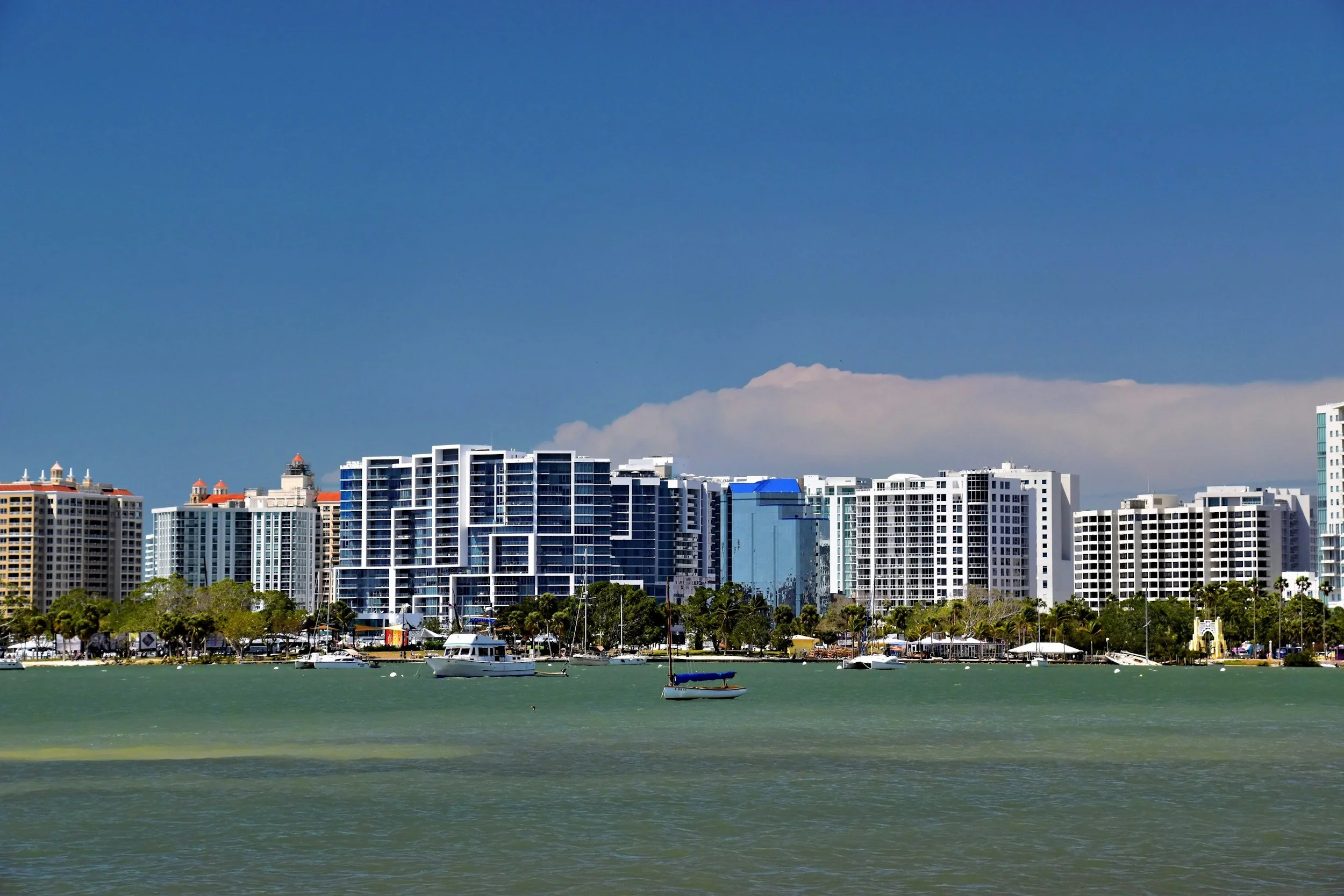
Sarasota is the larger of the two, and it shows. Downtown Sarasota has real density: restaurants, galleries, a performing arts scene anchored by the Sarasota Opera and the Sarasota Ballet, a farmers market that's been running since 1979, a waterfront that gets used. The Ringling Museum of Art sits on 66 acres just north of downtown and is one of the country's legitimately great regional art museums.
The city draws people who want Gulf Coast living without giving up cultural life. Retirees who want a full calendar. Families who did the school research and liked what they found. Remote workers who ran the numbers and decided the quality of life made sense. It's a city that has figured out how to be genuinely livable, not just scenic.
Price point reflects the demand. Median home prices in Sarasota sit in the mid-to-high $500s, with significant spread depending on neighborhood and proximity to the water. The barrier islands (Siesta Key, Lido Key) push into the $1M+ range quickly. More affordable pockets exist inland and in South Sarasota neighborhoods like Gulf Gate and Palmer Ranch, but the overall market reflects that.
Traffic is real, especially during season. The airport is manageable, and service routes keep expanding. The city is growing and feels like it.
Venice: Slower, Quieter, and Worth Taking Seriously
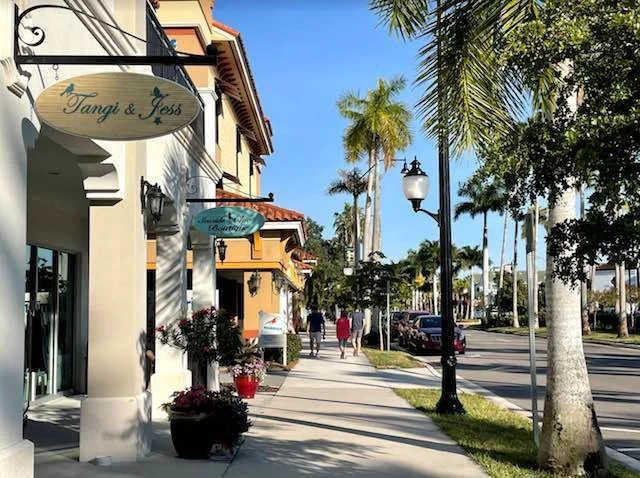
Venice gets underestimated. It's easy to write it off as a retirement town with a cute downtown, and that framing has some truth. But it's also a genuinely pleasant place to live, with a historic island core that most Florida cities would trade for in a heartbeat.
Venice Island, the original heart of the city, was designed in the 1920s with a Mediterranean Revival aesthetic and a walkable street grid. The downtown has restaurants, the Venice Theatre (one of the most active community theaters in the country), boutiques, and beach access within walking distance. It has the bones of a real small town, something you can't manufacture.
Caspersen Beach, at the southern tip of Venice Island, is famous for shark tooth hunting. It draws regulars who come with screens and patience and leave with bags of fossils. It's one of those only-here things that becomes part of life if you live nearby.
Venice also has easier beach access than Sarasota's barrier islands during season. Less crowded, less traffic, and less competition for parking.
The price point is meaningfully lower. Median home prices sit around $425,000, with single-family homes in the low $500s and condos starting in the high $200s. For buyers who want Gulf Coast proximity without the Sarasota price tag, Venice is a serious option, not a consolation prize.
The Englewood and South County Factor
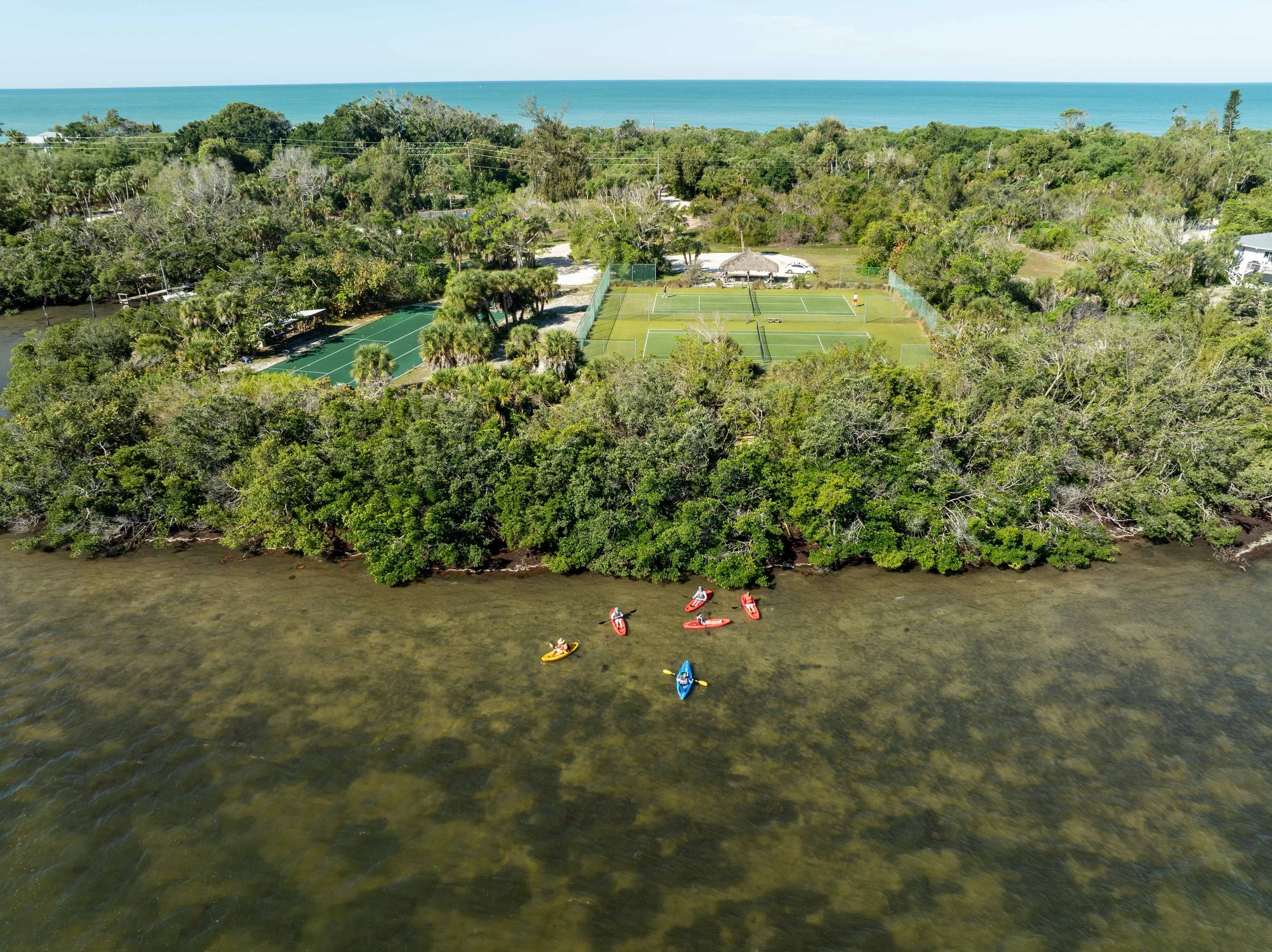
One thing Venice gives you that Sarasota doesn't: easy access to the southern end of the coast. Englewood, Manasota Key, and Boca Grande are all within reasonable range. These are quieter, less developed, and increasingly appealing to buyers who want barrier-island access without the crowds and cost of Sarasota's islands. If that stretch of coast appeals to you, Venice makes more sense as a base than Sarasota.
Who Each City Is Actually For
Sarasota makes sense if you want a full-service city. A real arts scene, more dining variety, better healthcare infrastructure, a broader job market, more activity year-round. You're paying for that infrastructure in the price of your home, but you're getting it.
Venice makes sense if you want a quieter pace, a walkable historic town center, lower price points, less traffic, and beach access without the competition. It's a better fit for people who are done with the hustle and want something with character.
Both have strong long-term real estate fundamentals. Gulf Coast inventory is finite. Demand from buyers relocating from higher-cost states continues. The question isn't which market is stronger. It's which one fits your actual life.
Not Sure Which One Fits?
Blue SRQ Real Estate works across both markets. If you're trying to figure out which makes more sense for your situation, we're happy to talk it through before you start seriously looking at properties.
